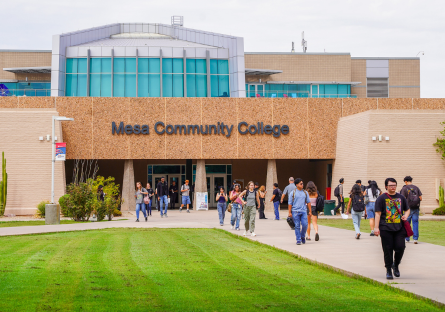
Maricopa Community Colleges is calling on the state of Arizona to restore foundational operating aid, highlighting a critical disconnect between the state’s economic ambitions and its lack of investment in the primary engine of its workforce.
Despite educating more Arizonans than any other higher education institution, Maricopa Community Colleges has received $0 in state operating aid since 2015. While Arizona positions itself as a global hub for advanced manufacturing and technology, the absence of sustained operating support for its largest higher education provider creates a growing disconnect between the state’s economic goals and the investment required to achieve them.
A Decade of Disinvestment
Since recession-era cuts eliminated operating aid, the District has gone without more than $655 million in state support. This has forced the District to rely exclusively on tuition and local property taxes to maintain its operations. Currently, Maricopa Community Colleges and Pima Community College are the only two districts in the state that receive no such funding.
"Maricopa Community Colleges is the #1 choice of Arizonans, yet the state has not invested in our operating aid for over a decade," said Maricopa Community Colleges Chancellor, Dr. Steven R. Gonzales. "At a time when Arizona is experiencing unprecedented economic growth, restoring this operating aid is essential to the state’s future. We cannot effectively scale the workforce of tomorrow on yesterday’s depleted funding models."
Operating aid is intended to serve as the state's foundational investment in community colleges, supporting instruction, student services, and workforce programs based on enrollment. For Maricopa Community Colleges, the absence of this funding can create long-term challenges.
The Valley’s Most Affordable Higher Education Provider
In 2024, the District educated 125,226 Arizona residents – surpassing the combined in-state enrollment of all three Arizona public universities. Despite the lack of state support, the Governing Board has kept tuition rates unchanged for the 2026-27 academic year to protect student access.
"Access to education is one of the most important drivers of economic mobility," said Maricopa Community Colleges Governing Board President, Dr. Linda Thor. "Ensuring that access remains affordable requires a shared commitment. The state has a role to play in keeping the doors of opportunity open for every Arizona resident."
Driving a $9 Billion Economic Impact
Maricopa Community Colleges remains a central driver of the regional economy, contributing nearly $9 billion annually to the state. With the vast majority of its graduates remaining in Arizona to live and work, the District serves as the primary engine for the local workforce.
Despite this impact, a significant funding disparity persists. If Maricopa Community Colleges were funded at the average level of other Arizona community college districts, it would receive more than $28 million annually in operating aid–essential resources that would be directly reinvested into high-demand workforce programs, student advising, and expanded access for all Arizonans.
Aligning Investment with Reality
District leaders are urging state policymakers to address these funding disparities in the upcoming state budget.
“Restoring operating aid is not just about a line item; it’s about aligning state investment with the realities of who is actually educating Arizona’s workforce,” added Dr. Gonzales.
Learn more at maricopa.edu.